

In Memphis, you’ll need to place your porta potty at least 10 feet from any house or property line according to Memphis-Shelby County Health Department regulations. Tennessee Department of Environment and Conservation guidelines also require a 100-foot buffer from wells or waterways. While 10 feet satisfies minimum code requirements, positioning units 50-100 feet from residences markedly reduces odor transmission—especially vital during summer months when temperatures exceed 85°F. Permit requirements under Code § 13-28-103 apply to commercial installations, and violations can result in fines of up to $500 per day. Understanding placement restrictions and special considerations guarantees full compliance.

Under Memphis and Shelby County ordinances, portable sanitation units must comply with specific setback requirements from residential structures.
You’ll need to maintain a minimum distance of 10 feet from property lines and structures, though local health department regulations may impose stricter standards depending on your site’s characteristics.
Memphis-Shelby County Health Department Code § 1200-1-6 governs temporary sanitation facilities, requiring adequate ventilation pathways and compliance with accessibility requirements.
You’re also subject to placement restrictions near water sources—typically 100 feet from wells or natural waterways.
For construction sites, the Tennessee Occupational Safety and Health Administration (TOSHA) mandates units within 200 feet of work areas.
Your placement strategy should integrate these multi-jurisdictional requirements while optimizing user accessibility.
We’ll verify all applicable codes before installation to ensure your configuration meets current regulatory frameworks.
See also: porta potty rental near Memphis
Memphis residential sanitation rules establish specific performance standards that directly affect your porta potty placement decisions.
The Memphis-Shelby County Health Department enforces Title 13 of the Municipal Code, which mandates minimum setback distances from residential structures. You’ll need to maintain at least 10 feet from property lines and 50 feet from private wells or water sources.
The code requires proper ventilation systems and regular servicing intervals to prevent nuisance conditions. Mobile sanitation facilities must comply with Tennessee Department of Environment and Conservation standards, including proper waste containment and disposal protocols.
You’re also subject to zoning ordinances that restrict placement in front yards and require screening from public view.
Advanced GPS mapping technology now enables precise compliance verification, ensuring your rental meets all regulatory benchmarks while optimizing site functionality.
When positioning temporary sanitation units at Memphis residential properties, you’ll need to comply with three distinct setback distances.
Primary structure setbacks mandate a minimum 10-foot clearance from dwelling foundations, preventing structural interference and ensuring adequate access corridors.
Property line setbacks require a 5-foot separation from adjacent parcels, protecting neighboring properties from nuisance concerns while maintaining code compliance.
Water source setbacks require 50 feet from wells, springs, or surface water bodies to safeguard groundwater quality per Tennessee Department of Environment and Conservation standards.
You’re also bound by accessibility pathway requirements: maintain 36-inch-wide clearances for ADA compliance and emergency access.
For ideal placement that enhances convenience while meeting these technical specifications, consult Memphis’s current zoning ordinances and residential temporary facility guidelines before installation.
While minimum setback requirements establish legal boundaries, ideal porta potty placement typically ranges between 50-100 feet from residential structures to balance accessibility with comfort considerations.
You’ll find this distance aligns with ANSI/NSF Standard 350’s recommendations for temporary sanitation facilities while maintaining practical user access. The 50-foot minimum effectively mitigates odor transmission and visual impact concerns documented in EPA’s sanitation guidelines.
However, you should extend placement to 100 feet when servicing high-traffic events or multi-day installations. Site-specific variables—prevailing wind patterns, terrain grade, and property boundaries—require adjustment of these baseline parameters.
Modern sensor-equipped units with improved ventilation systems may permit closer placement while maintaining compliance.
Integrity Restrooms’ placement analysis incorporates these technical specifications and Memphis’s municipal ordinances to optimize positioning.
The International Association of Plumbing and Mechanical Officials (IAPMO) establishes baseline placement protocols requiring temporary sanitation facilities maintain minimum 50-foot horizontal separation from residential dwellings, with specific modifications for event duration and user density.
| Property Classification | Minimum Distance |
|---|---|
| Single-family residence | 50 feet |
| Multi-unit dwelling | 75 feet |
| Property line boundary | 10 feet |
| Water well/source | 100 feet |
| Food preparation area | 100 feet |
Memphis municipal code 13-301 reinforces these standards while permitting variance applications through the Building Code Enforcement Division. You’ll need documentation demonstrating compliance with setback requirements, adequate ventilation pathways, and ADA accessibility standards. These specifications protect property values while ensuring sanitary conditions meet EPA guidelines for temporary waste containment systems in residential zones.
Porta potty placement requirements vary considerably across residential, commercial, and event applications due to distinct regulatory frameworks governing each setting.
You’ll find residential placements governed by local zoning ordinances that typically require setbacks of 10-20 feet from property lines and dwellings.
Commercial sites follow OSHA standards mandating accessibility within 500 feet of work areas, with ADA compliance dictating specific spacing and surfacing requirements.
Event settings operate under temporary-use permits with variable distance specifications based on attendee capacity—you’re looking at one unit per 50 guests for a four-hour event.
Tennessee Department of Health regulations add another layer, requiring minimum 100-foot setbacks from wells and water sources across all applications.
Understanding these distinctions guarantees you’ll maintain compliance while optimizing placement efficiency for your specific needs in Memphis.
Beyond understanding setting-specific requirements, you’ll need to evaluate multiple technical and regulatory factors that dictate exact porta potty positioning for your Memphis property.
Critical Distance Determinants:
While regulatory compliance governs placement distances, effective odor management requires you to position units downwind from occupied structures and gather areas. Memphis’s prevailing southwesterly winds necessitate strategic northeastern placement when possible.
Modern porta potties incorporate ventilation systems that create negative pressure differentials, drawing air through roof vents while minimizing odor escape. You’ll achieve ideal results by maintaining 50-75 feet from residences during summer months when temperatures exceed 85°F, as heat accelerates decomposition rates and volatile organic compound release.
Advanced units feature activated-carbon filtration systems that capture hydrogen sulfide and ammonia molecules before they are discharged into the atmosphere. Consider installing windbreak barriers or strategically positioning units behind existing structures to deflect airborne particles.
Temperature monitoring and scheduled servicing intervals—typically 2-3 days during peak usage—prevent saturation conditions that compromise ventilation effectiveness and exponentially increase odor radius.
Strategic placement must accommodate two critical access requirements: unobstructed pathways for users and adequate maneuvering space for service vehicles.
Access Specifications:
You’ll need to verify these specifications before finalizing placement with Integrity Restrooms.
Before finalizing porta potty placement, you must address health code requirements that directly impact proper setback distances from occupied structures.
The Memphis-Shelby County Health Department mandates a minimum 10-foot clearance from dwellings to prevent the migration of airborne contaminants and maintain sanitary buffer zones. You’ll need adequate ventilation pathways that don’t channel odors toward windows, HVAC intakes, or outdoor living spaces.
Strategic positioning minimizes cross-contamination risks while ensuring compliance with Tennessee’s sanitation codes. Place units where prevailing winds carry odors away from structures, and maintain clear sight lines for monitoring usage patterns.
You should establish drainage measures to prevent runoff from reaching foundations or water sources. Modern waste management protocols require accessible cleaning routes that don’t compromise your property’s sanitary envelope, protecting occupants while optimizing service efficiency throughout your rental period.
Because groundwater contamination poses severe legal and environmental consequences, you must position porta potties on non-porous surfaces or compacted ground with minimum 2% grade away from structures.
Tennessee’s environmental regulations mandate specific drainage protocols that prevent effluent from migrating toward foundations or water sources.
Critical placement requirements include:
Modern high-capacity units feature improved leak-detection technology and reinforced bases, but proper site preparation remains your primary defense against contamination incidents.
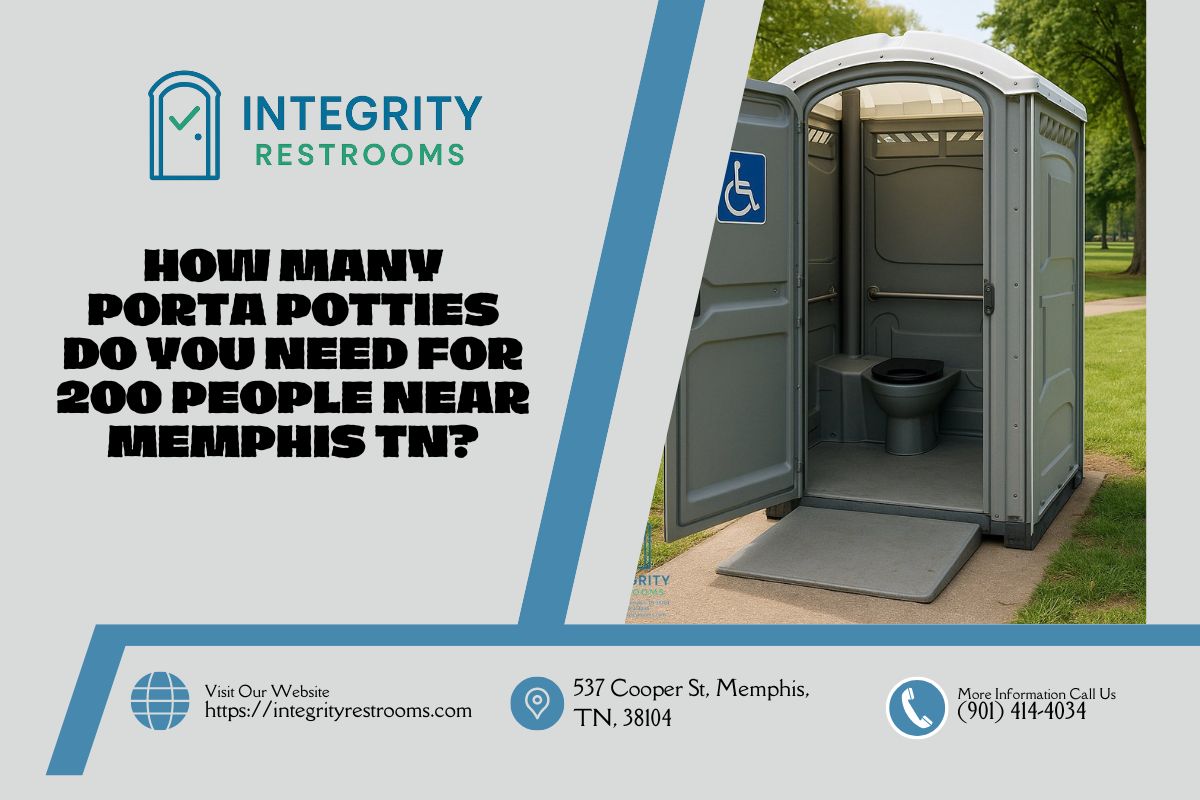
The Federal ADA Standards for Accessible Design mandate that at least 5% of your portable restroom fleet—minimum of 1 unit—must provide wheelchair accessibility when serving public events or construction sites.
You’ll need to position these ADA-compliant units on firm, level ground with approach paths measuring at least 36 inches wide.
Memphis fire codes require maintaining unobstructed emergency vehicle access routes of 20 feet minimum width, so you can’t place porta potties where they’ll block critical response corridors.
Your placement strategy must account for ambulance maneuverability and firefighter equipment deployment zones.
Smart positioning integrates compliance automation—using GPS mapping tools to verify setback distances from structures while ensuring ADA units remain within 200 feet of maximum travel distance from the farthest work or event area.
Within Memphis city limits, you’ll position porta potties at minimum setback distances of 10 feet from any occupied structure’s exterior wall, per Memphis Building Code Section 106.3.2, which governs temporary facility placement on residential and commercial properties.
Optimal Placement Zones for Memphis Properties:
We’ll strategically assess your property’s constraints to enhance code compliance while optimizing user accessibility.
Beyond meeting Memphis code requirements, you’ll need to balance user privacy expectations with neighborhood impact mitigation.
Position units behind existing structures—garages, sheds, or fencing—to create natural sight barriers while maintaining 15-foot setbacks from property lines, as required by standard ordinances. You’ll enhance privacy by orienting door openings away from high-traffic sightlines and neighboring windows.
Strategic placement near property corners reduces visual impact across multiple adjacent lots.
Consider prevailing wind patterns when positioning units; Memphis’s dominant southwest winds should dictate door orientation to minimize odor transfer toward occupied structures.
Install units on level, compacted surfaces to prevent tipping and guarantee ADA-compliant access pathways when required.
Deploy temporary privacy screening for events lacking natural barriers.
These evidence-based placement protocols improve regulatory compliance, enhance the user experience, and minimize community disruption throughout your rental period.
Memphis Municipal Code Section 11-12-8 explicitly prohibits porta potty placement within public rights-of-way, including sidewalks, parkways, and street-adjacent grassed areas without special permits.
You’ll need to avoid these restricted zones:
Understanding restricted zones protects you from violations, but proper authorization secures your legal right to operate.
Memphis-Shelby County regulations require permits for temporary sanitation facilities under Code § 13-28-103. You’ll submit applications through the Public Works Department, specifying placement coordinates, duration, and servicing frequency.
Compliance mandates adherence to setback requirements: typically 10 feet from property lines and 100 feet from water sources per Tennessee Department of Environment and Conservation standards.
Your permit documentation must include site plans, waste management protocols, and ADA accessibility considerations for events with 50 or more attendees.
Inspection intervals vary—special events require pre-placement approval within 72 hours. Violations carry penalties of $50-$500 per day.
Digital permitting through MemphisOne streamlines approval, reducing processing time to 48 hours.
We’ll navigate these requirements, ensuring your installation meets all regulatory benchmarks efficiently.
While residential properties often qualify for permit exemptions, commercial installations and public events trigger mandatory authorization under Memphis Municipal Code § 13-28-103.
You’ll need to navigate specific regulatory thresholds:
Obtaining proper documentation prevents costly violations and guarantees your project meets Memphis’s progressive sanitation standards.
When you violate Memphis’s porta potty placement ordinances, you’ll face escalating enforcement actions under Municipal Code § 13-28-201.
Initial violations typically result in written notices requiring immediate compliance within 24-48 hours. Continued non-compliance triggers civil penalties ranging from $50 to $500 per day under § 13-28-203, with fines accumulating until you achieve full compliance.
You’ll also face potential service disconnection orders, which will prevent further unit placements until you resolve existing violations.
In severe cases involving repeated offenses or health hazards, Memphis Environmental Health may pursue misdemeanor charges carrying fines up to $1,000 and potential court appearances.
Moreover, permit revocations can restrict your future rental capabilities within city limits.
Property owners may file nuisance claims against you, creating civil liability exposure beyond municipal penalties.
You can place a porta potty on your front lawn in Memphis, but you’ll need to comply with setback requirements, zoning ordinances, and HOA restrictions. Check local codes regarding temporary structures and obtain necessary permits before installation.
You can typically keep a porta potty on your Memphis residential property for the duration of your permitted project or event. However, we’ll help you verify specific timeframe requirements with Memphis’s Division of Public Works to guarantee code compliance.
You’ll likely need HOA approval since most governing documents regulate temporary structures. Review your association’s architectural guidelines and CC&Rs initially, then submit a written request detailing placement, duration, and compliance with local Memphis codes before installation.
If neighbors complain, Memphis Code Enforcement may investigate whether your porta potty violates setback requirements, nuisance ordinances, or health codes. You’ll need documented compliance with placement regulations to defend against potential citations or removal orders.
Yes, you’ll incur supplementary delivery fees when placement exceeds standard access distances. Extended hose lengths, specialized equipment, and increased labor time all drive up costs. We’ll assess your site’s specifications and provide transparent pricing for compliant, cutting-edge placement solutions.





© 2026 Integrity Restrooms. All Rights Reserved.