
You can legally place a porta potty indoors in Memphis, TN, but you’ll need to comply with Tennessee building codes, International Building Code standards, and local health department regulations. Your installation must include engineered ventilation systems achieving 6-10 air changes per hour, professional waste servicing every 24-48 hours, and proper permitting based on duration and scope. Indoor use is typically approved for renovations, construction projects, emergencies, or significant events. Understanding the specific ventilation requirements, hygiene protocols, and documentation standards will help ensure your installation complies with all applicable regulations.

When considering indoor porta potty installations in Memphis, you’ll find that Tennessee state law and local Memphis-Shelby County codes don’t explicitly prohibit temporary sanitation facilities inside buildings.
However, you must comply with several regulatory frameworks. The International Building Code (IBC), adopted by Memphis, mandates adequate sanitation facilities based on occupancy type and load calculations.
You’ll need to ensure that ventilation systems meet ASHRAE standards and that waste disposal methods comply with Environmental Health Department requirements. Building permits may be necessary depending on installation duration and scope.
Moreover, you must verify that your indoor porta potty configuration doesn’t violate fire code egress requirements or accessibility standards under ADA guidelines.
Commercial applications typically require advance coordination with Memphis Code Enforcement to ascertain full compliance.
See also: porta potty rental in Memphis TN
Beyond the baseline legal requirements, you’ll encounter specific Memphis-Shelby County Health Department regulations governing indoor portable sanitation installations.
These codes address ventilation systems, waste containment protocols, and accessibility standards that differ from outdoor applications. Your facility must demonstrate adequate air exchange rates and comply with cross-contamination prevention measures.
Vital compliance factors include:
Documenting compliance through permits and regular inspections is crucial for legal indoor operations.
Despite stringent regulations governing portable indoor sanitation, Memphis building authorities recognize specific scenarios in which temporary indoor installations meet legitimate operational needs.
You’ll find approved applications during major building renovations when existing plumbing systems must be deactivated. Construction projects involving structural modifications to permanent facilities often necessitate temporary sanitation solutions that comply with ventilation requirements and containment protocols.
Emergencies provide additional justification, including natural disasters, infrastructure failures, or sudden facility damage that requires immediate sanitation alternatives.
You can also secure permits for large-scale indoor events at convention centers or warehouses when permanent facilities are insufficient for anticipated attendance.
Each scenario demands documented justification, engineered ventilation plans, and strict adherence to Health Department protocols.
Integrity Restrooms maintains expertise in navigating Memphis permitting processes, ensuring your indoor installation meets all regulatory standards while efficiently addressing your operational requirements.
Understanding these approved scenarios directly informs the practical motivations behind requests for indoor portable restrooms.
You’ll encounter specific situations where conventional plumbing systems can’t meet immediate sanitation requirements. These circumstances demand creative solutions that maintain code compliance while addressing urgent facility needs.
Primary applications include:
Each scenario requires proper ventilation systems, structural load assessments, and authorization from the Memphis Building Department before installation.
When undertaking a residential bathroom remodel, you’ll face a critical decision: where will household members access sanitary facilities during the 2-6 week construction period?
Indoor porta potty placement offers a strategic solution that eliminates weather exposure and maintains dignified access. You’ll position the unit in your garage, basement, or spare room—areas with adequate ventilation and flooring that can support 500+ pounds when serviced.
This configuration preserves your family’s routine while contractors demolish fixtures, reroute plumbing, and install new systems.
Memphis building codes don’t prohibit temporary indoor sanitation units on private property, provided you maintain proper ventilation protocols.
You’ll coordinate weekly service schedules aligned with construction phases, ensuring continuous functionality without disrupting renovation timelines or compromising household sanitation standards.
Large-scale indoor venues throughout Memphis—including the Cook Convention Center, FedExForum, and private warehouse facilities—require supplemental restroom capacity when attendee volume exceeds permanent fixture ratios mandated by Tennessee plumbing codes (one toilet per 40 occupants for events exceeding four hours).
You’ll need strategically positioned portable units that integrate with existing drainage systems or operate as self-contained modules. We deploy ADA-compliant models that meet the ICC/ANSI A117.1 accessibility standard.
Critical deployment scenarios include:
Our climate-controlled units maintain temperature consistency while featuring ventilation systems that prevent odor migration into adjacent spaces, protecting your brand reputation during high-stakes events.
Indoor portable restroom deployments are subject to stricter air quality regulations than outdoor installations, particularly under Tennessee Department of Environment and Conservation (TDEC) guidelines for enclosed workspace air standards.
You’ll need mechanical ventilation systems that achieve minimum air exchange rates of 6-10 changes per hour, depending on usage frequency. Advanced carbon filtration units and negative pressure configurations prevent odor migration into adjacent spaces.
Chemical treatments must comply with VOC emission limits while maintaining bacterial suppression. You’re required to install continuous monitoring systems that track hydrogen sulfide and ammonia concentrations and trigger alerts when thresholds are exceeded.
In Memphis’s humid climate, dehumidification integration prevents moisture buildup, which accelerates odor development. These systems ensure your indoor units comply with OSHA workplace standards and local building codes.
Because oxygen levels directly affect bacterial decomposition rates in portable restroom waste tanks, inadequate airflow creates anaerobic conditions that produce methyl mercaptan and other malodorous sulfur compounds at concentrations 300% higher than in properly ventilated units.
Strategic airflow management in enclosed Memphis facilities requires:
You’ll need to implement cross-ventilation pathways that exceed OSHA confined-space standards and comply with Tennessee’s commercial building codes for mechanical ventilation rates.
Even with ideal airflow protocols in place, you’ll need multi-layered odor-neutralization strategies that target volatile organic compounds at the molecular level rather than masking them with fragrances.
Advanced enzymatic treatments break down ammonia and sulfur compounds before they volatilize, while activated carbon filtration systems capture particulates in real-time.
You’ll need photocatalytic oxidation technology to decompose odor molecules through UV-activated titanium dioxide surfaces.
Integrity Restrooms implements vapor-phase treatment protocols that continuously neutralize malodorous gases.
We’ve integrated IoT sensors monitoring hydrogen sulfide and methane concentrations, triggering automated dispensing systems when thresholds exceed 0.5 ppm.
You’re receiving EPA-compliant solutions that meet indoor air quality standards while maintaining adequate sanitation.
These innovations guarantee your facility meets both regulatory requirements and occupant comfort expectations.
When deploying portable sanitation units indoors, you’ll face heightened pathogen transmission risks that require protocols that exceed outdoor installation standards.
Indoor environments concentrate aerosols and surface contaminants, requiring rigorous disinfection schedules and antimicrobial surface treatments. You’ll need ventilation systems that achieve minimum air exchange rates while preventing cross-contamination with occupied spaces.
Critical safety protocols include:
You’re implementing infection control measures that align with OSHA Bloodborne Pathogens Standard and CDC sanitation guidelines.
Integrity Restrooms configures indoor installations with antimicrobial coatings and monitoring systems ensuring Memphis facilities maintain ideal hygiene parameters.
Interior floor surfaces require multi-layer protection systems that address both immediate liquid containment and long-term structural preservation. You’ll need commercial-grade containment barriers beneath each unit, extending 12 inches beyond the unit footprint. These systems prevent moisture from penetrating the subfloor and protect finished surfaces from chemical degradation.
| Protection Layer | Material Specification |
|---|---|
| Base Layer | 20-mil polyethylene sheeting |
| Additional Barrier | Absorbent polymer matting |
| Perimeter Containment | Raised edge spill berms |
| Surface Protection | Non-slip protective flooring |
| Drainage Management | Channeled collection systems |
You’re implementing EPA-compliant containment protocols that prevent cross-contamination and facilitate rapid response to overflow events. Advanced polymer barriers provide puncture resistance while maintaining flexibility across temperature variations. Strategic placement of absorption materials ensures immediate liquid capture, protecting your facility’s structural integrity and maintaining regulatory compliance.
Because indoor porta potty installations create unique sanitation challenges, you’ll need thorough handwashing stations that meet OSHA’s sanitation standards under 29 CFR 1910.141. These regulations mandate adequate facilities for employees to maintain proper workplace hygiene.
Your handwashing solution should include:
Integrity Restrooms provides integrated hygiene stations specifically designed for indoor applications.
We’ll configure your handwashing setup to complement your indoor porta potty placement while maintaining compliance with Memphis health department requirements and CDC hygiene protocols.
Strategic positioning of indoor porta potties directly impacts accessibility, ventilation effectiveness, and regulatory compliance for your Memphis facility.
You’ll need to position units near existing HVAC returns or exhaust systems to enhance air circulation and odor control. Maintain minimum 36-inch clearance around each unit for ADA compliance and emergency egress requirements.
Place units on level, load-bearing surfaces capable of supporting at least 500 pounds. Avoid positioning near food-preparation areas—Tennessee health codes require specific separation distances.
You should establish direct pathways to service entrances to ensure efficient waste removal without disrupting operations.
Consider installing units near existing plumbing infrastructure if you’re upgrading to flushable models.
Document your placement strategy for inspection, including ventilation calculations and accessibility measurements that demonstrate code compliance.
Your facility’s layout determines which zones comply with Memphis building codes and support operational requirements for indoor portable restroom placement.
You’ll need to evaluate structural load capacity, ventilation access points, and proximity to existing plumbing infrastructure. Strategic positioning minimizes installation complexity while maximizing user accessibility.
Critical Location Factors:
Consider traffic flow patterns and privacy requirements when finalizing placement.
Your selected location should accommodate service vehicle access for regular maintenance without disrupting facility operations.
Once you’ve identified the ideal indoor location, engage certified technicians who understand Memphis municipal requirements for temporary sanitation installations.
You’ll need professionals who coordinate proper floor protection, ventilation integration, and waste containment systems that comply with Shelby County health codes.
Professional servicing schedules depend on usage intensity—high-traffic events require daily maintenance, while construction sites typically need bi-weekly servicing.
Your technicians should monitor tank capacity, sanitize touchpoints, restock supplies, and inspect ventilation efficiency at each service visit.
Ensure your provider implements real-time monitoring systems that track usage patterns and maintenance needs.
Advanced providers use IoT sensors to enable proactive service alerts and prevent overflow situations.
Request documentation for all service visits, including waste-disposal certificates and sanitization reports, to maintain regulatory compliance throughout your indoor installation period.
You’ll typically spend $150-$300 per month for an indoor porta potty rental in Memphis, depending on unit specifications and servicing frequency. Costs vary based on advanced features such as handwashing stations, ADA compliance, and the ventilation systems you require.
Standard porta potties won’t damage your floors when you use proper protective barriers. You’ll need reinforced plywood or heavy-duty mats beneath units to distribute weight evenly, preventing indentation on hardwood and cracking tile grout under sustained loads.
You’ll need to verify that your general liability policy covers the placement of indoor portable restrooms, as standard coverage may exclude interior installations. We recommend consulting your insurer about premises liability extensions and discussing specific indoor deployment scenarios before proceeding.
You’ll need to service indoor units every 1-3 days, depending on usage volume. High-traffic events require daily maintenance, while low-traffic installations can be scheduled for up to 72 hours. Regular monitoring guarantees peak performance and compliance with health regulations.
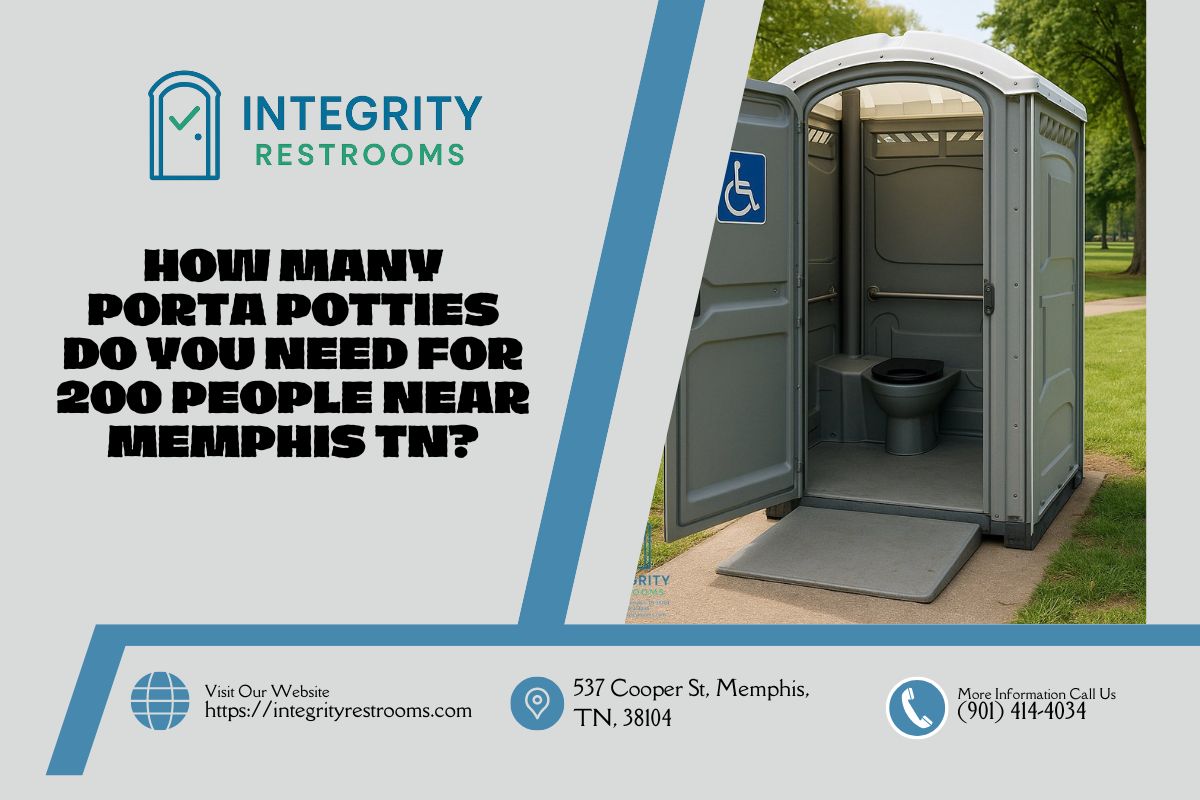
Yes, you’ll find ADA-compliant porta potties available for indoor rental in Memphis. These units meet federal accessibility standards, featuring wider doorways, interior handrails, and spacious layouts that accommodate wheelchairs while ensuring regulatory compliance for your facility.




© 2026 Integrity Restrooms. All Rights Reserved.