

When you use a porta potty in Memphis, licensed technicians extract the waste using vacuum trucks that transport it to EPA-approved wastewater treatment facilities operating under TDEC regulations. The waste, classified as septage under Tennessee Code Annotated § 68-221-406, undergoes primary screening, biological treatment, and disinfection before meeting the NPDES permit discharge standards. Licensed haulers maintain manifest records tracking waste volumes and destinations to ensure compliance with DOT regulations under 49 CFR Part 172. At the same time, the complete treatment process includes additional stages that protect Memphis’s local watersheds.
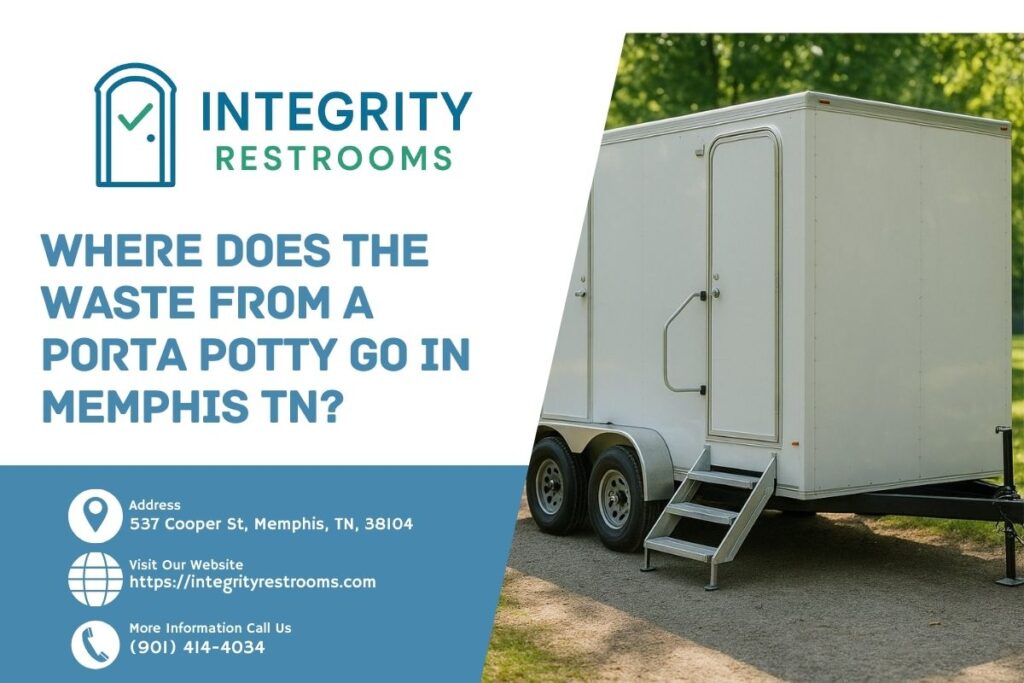
Porta potty waste collection in Memphis follows strict Tennessee Department of Environment and Conservation (TDEC) protocols that classify the contents as septage under state regulations.
When you schedule service, licensed technicians use specialized vacuum trucks equipped with high-capacity pumps to extract waste from holding tanks. The collection process employs sealed systems that prevent environmental contamination and odor release.
Memphis-based operators must maintain proper permits and disposal records to comply with regulatory requirements. You’ll find that waste removal occurs through standardized procedures: tank evacuation, rinse cycle implementation, and sanitizer replenishment.
Each truck undergoes regular inspections to meet state safety standards. This systematic approach guarantees your porta potties remain functional while protecting Memphis’s water quality and public health through controlled septage management.
See also: Memphis portable toilet rental service
When Memphis waste management professionals arrive at your location, vacuum trucks serve as the critical infrastructure for extracting and transporting porta potty waste to approved treatment facilities. These specialized vehicles utilize powerful pumps that create negative pressure, efficiently removing waste through reinforced hoses connected directly to your unit’s holding tank.
| Truck Component | Function |
|---|---|
| Vacuum Pump System | Generates suction pressure up to 400 CFM |
| Storage Tank | Holds 1,500-3,000 gallons of waste |
| Discharge System | Transfers contents to treatment facilities |
You’ll notice that certified operators monitor tank levels and maintain proper seals throughout collection, ensuring compliance with EPA regulations. The trucks transport waste directly to municipal wastewater treatment plants or licensed septage facilities, where rigorous processing eliminates pathogens and environmental contaminants before safe discharge.
Before technicians initiate waste extraction procedures, they’ll don OSHA-mandated personal protective equipment including chemical-resistant gloves, face shields, and protective coveralls rated for biological hazards.
You’ll find operators follow strict containment protocols to prevent environmental contamination during pumping operations. They’ll establish secure connections between vacuum hoses and waste tanks, utilizing sealed coupling systems that eliminate spillage risks.
Technicians monitor air quality throughout the process to ensure proper ventilation in confined spaces. They’ll deploy spill containment barriers around work areas and maintain on-site hazmat cleanup kits.
Memphis regulatory standards require operators to document each extraction, tracking waste volumes and disposal destinations. This systematic approach protects public health while ensuring you’re getting professional service that meets federal and state compliance requirements without compromising operational efficiency.
After collection from your Memphis location, waste is transported directly to EPA-licensed treatment facilities that specialize in processing human waste.
You’ll find these facilities operate under strict regulations from the Tennessee Department of Environment and Conservation, ensuring proper sanitation standards. The transport vehicles follow designated routes to wastewater treatment plants where the waste undergoes biological treatment processes.
Your waste isn’t subject to unnecessary government oversight beyond critical health protocols—facilities focus on efficient processing rather than bureaucratic delays. The treatment centers separate solid matter from liquids, then process materials through aerobic digestion.
This streamlined system means your waste reaches its destination quickly, typically within hours of collection. You’re free from dealing with complex disposal requirements—licensed haulers handle all regulatory compliance and facility coordination automatically.
Memphis operates several EPA-certified wastewater treatment facilities that process portable restroom waste in compliance with Clean Water Act standards. Your waste is delivered to facilities such as the T.E. Maxson Wastewater Treatment Plant or the South Plant, where it undergoes rigorous treatment protocols.
These facilities separate solids through screening and sedimentation processes, then apply biological treatment to break down organic matter. You’ll find that Memphis’s treatment plants utilize activated sludge systems and advanced oxidation methods to eliminate pathogens and contaminants.
The treated water meets NPDES permit requirements before discharge into the Mississippi River. Biosolids undergo further processing for safe land application or disposal.
This system guarantees you’re not restricted by waste management concerns while maintaining environmental compliance. Your portable restroom waste receives the same thorough treatment as residential sewage.
When transporting porta potty waste in Tennessee, you must comply with DOT regulations under 49 CFR Part 172, which classify septage as non-hazardous material requiring proper manifesting. You’ll need accurate documentation tracking waste from pickup to the disposal facility.
| Regulation | Requirement |
|---|---|
| 49 CFR Part 172 | Proper classification and manifesting of septage materials |
| Tennessee Rule 0400-40-11 | Waste hauler permits and vehicle registration |
| EPA 40 CFR Part 503 | Pathogen reduction and pollutant limits for biosolids |
| TDEC 0400-40-05 | Land application standards and site restrictions |
| Local Ordinances | Memphis-specific routing and disposal facility protocols |
Tennessee requires licensed haulers to maintain manifest records for three years. You’re free to verify your service provider maintains full regulatory compliance, protecting both environmental standards and your property interests.
Upon arrival at Memphis’s T.E. Maxson Wastewater Treatment Plant, your porta potty waste undergoes primary screening to remove solid debris.
You’ll find the effluent then enters aeration tanks where beneficial bacteria break down organic matter through biological oxidation. This alternate treatment process eliminates pathogens and reduces biochemical oxygen demand to EPA-compliant levels.
The treated water proceeds through clarification, where remaining solids settle and separate. Disinfection via chlorination or UV treatment follows, ensuring safe discharge into the Mississippi River.
Biosolids are dewatered and stabilized, then either land-applied as nutrient-rich fertilizer or transported to approved disposal facilities.
Memphis’s facilities maintain strict adherence to Clean Water Act standards and Tennessee Department of Environment and Conservation permits.
You’re guaranteed your waste won’t contaminate local waterways or compromise public health.
Before wastewater can undergo biological treatment, Integrity Restrooms’ vacuum trucks deliver your porta potty contents to Memphis facilities where mechanical separation equipment isolates solid and liquid components.
Screening systems remove large debris and non-biodegradable materials that you’d prefer not clogging treatment systems. Primary clarifiers then settle the remaining solids by gravity separation, creating sludge that settles to the bottom while clearer effluent rises to the surface.
The separated solids undergo thickening to reduce volume and prepare them for disposal or beneficial reuse.
Meanwhile, the liquid fraction proceeds to subsequent treatment stages, where biological processes break down dissolved organic matter. This separation stage is mandated by EPA regulations and Tennessee Department of Environment and Conservation standards, ensuring your waste receives proper treatment before discharge into the environment.
After biological treatment removes dissolved organic matter from your porta potty waste’s liquid fraction, Memphis treatment facilities deploy multiple disinfection methods to eliminate pathogenic microorganisms before final discharge.
You’ll find facilities using UV radiation, chlorination, or ozone treatment—each method meeting EPA standards while respecting environmental regulations that protect your waterways.
The solid biosolids undergo further processing:
Once processed, you’re free from waste concerns—treated water returns to natural systems, and biosolids become beneficial soil amendments.
Sustainability transforms porta potty waste from environmental liability into ecological asset when you follow EPA’s Resource Conservation and Recovery Act (RCRA) guidelines.
You’ll uncover that proper waste processing prevents groundwater contamination and reduces methane emissions by 60% compared to landfill disposal. Modern wastewater treatment plants convert your collected waste into Class B biosolids, meeting nitrogen reduction mandates while generating renewable energy through anaerobic digestion.
Your choice of compliant porta potty services directly impacts Memphis’s watershed protection. Licensed haulers must transport waste to permitted facilities, preventing illegal dumping that threatens local ecosystems.
You’re supporting carbon-neutral operations when providers utilize biogas capture systems. The treated effluent returns safely to water systems, while processed solids become agricultural amendments—closing the loop without government-mandated restrictions on your event planning freedom.
Memphis’s interconnected waterways depend on your waste disposal choices at every porta potty servicing interval.
When you select compliant waste management services, you’re actively preventing pathogen infiltration into the Wolf River, Nonconnah Creek, and Mississippi River tributaries. Proper disposal channels waste through designated treatment facilities where regulated processes neutralize harmful bacteria and chemical compounds before discharge.
Your choice protects these critical ecosystems:
EPA-mandated treatment protocols guarantee Memphis’s natural resources remain uncompromised.
You’re safeguarding environmental freedom through responsible porta potty waste management decisions.
When porta potty waste bypasses EPA-regulated treatment facilities, you’re exposing Memphis communities to documented health hazards and environmental violations.
Untreated sewage releases E. coli, hepatitis A, and parasitic pathogens into groundwater systems that supply your drinking water. You’ll face substantial fines under Clean Water Act violations when waste enters storm drains or Wolf River tributaries.
Nitrogen and phosphorus overloads trigger algal blooms that suffocate aquatic life and restrict recreational water access. Noncompliant disposal creates biohazard zones that require costly remediation.
Licensed haulers prevent these risks by transporting waste exclusively to certified treatment plants where multi-stage processing eliminates pathogens before discharge.
You’re protecting both public health and your property values when you verify that your service provider maintains proper disposal documentation and follows Tennessee Department of Environment and Conservation protocols.
Under Tennessee Code Annotated § 68-221-406, you’re required to transport porta potty waste exclusively to permitted wastewater treatment facilities or EPA-approved septage disposal sites.
Memphis enforces strict compliance protocols to protect public health and environmental resources.
Your waste hauler must maintain proper licensing through the Tennessee Department of Environment and Conservation (TDEC). This guarantees accountability throughout the disposal chain.
Key regulatory requirements include:
Non-compliance results in substantial penalties.
Choosing licensed operators like Integrity Restrooms guarantees regulatory adherence without compromising your operational independence.
Licensed haulers operating in Memphis must maintain extensive compliance documentation that demonstrates adherence to state and federal waste management standards.
You’ll find that authorized transporters carry valid permits from the Tennessee Department of Environment and Conservation, complete with vehicle manifests tracking every load’s origin and destination.
They’re required to maintain insurance certificates, driver certifications, and regular equipment inspection records.
Haulers must document disposal at EPA-approved treatment facilities, ensuring complete transparency of the chain of custody.
Non-compliance triggers immediate license suspension and substantial penalties.
When you choose Integrity Restrooms, you’re partnering with a company that works exclusively with certified haulers who maintain pristine regulatory records.
This protects your event, property, and community from unauthorized dumping while ensuring proper waste processing in accordance with environmental protection protocols.
Violators of portable sanitation disposal regulations face severe financial and legal consequences that escalate based on the infraction’s severity and environmental impact.
You’ll encounter enforcement actions from multiple agencies including the Tennessee Department of Environment and Conservation and local health departments.
Non-compliance strips away your operational autonomy through:
Understanding these consequences protects your business freedom.
When you partner with licensed haulers like Integrity Restrooms, you safeguard your operations from regulatory interference while maintaining full environmental compliance.
You’ll need weekly servicing for construction sites under OSHA regulations. High-traffic jobsites require twice-weekly maintenance to maintain compliance and worker satisfaction. We’ll pump waste, sanitize units, and restock supplies, ensuring your crew’s access to clean facilities without disruption.
You’ll find formaldehyde-free biocides, enzymes, and surfactants in compliant porta potties. These EPA-approved chemicals break down waste, neutralize odors, and maintain sanitary conditions without restricting your site operations or violating environmental regulations in Memphis.
Yes, you can rent porta potties for residential projects in Memphis. We’ll deliver compliant units to your property, handle all required permits, and manage waste disposal in accordance with local regulations, ensuring you’re hassle-free throughout the rental period.
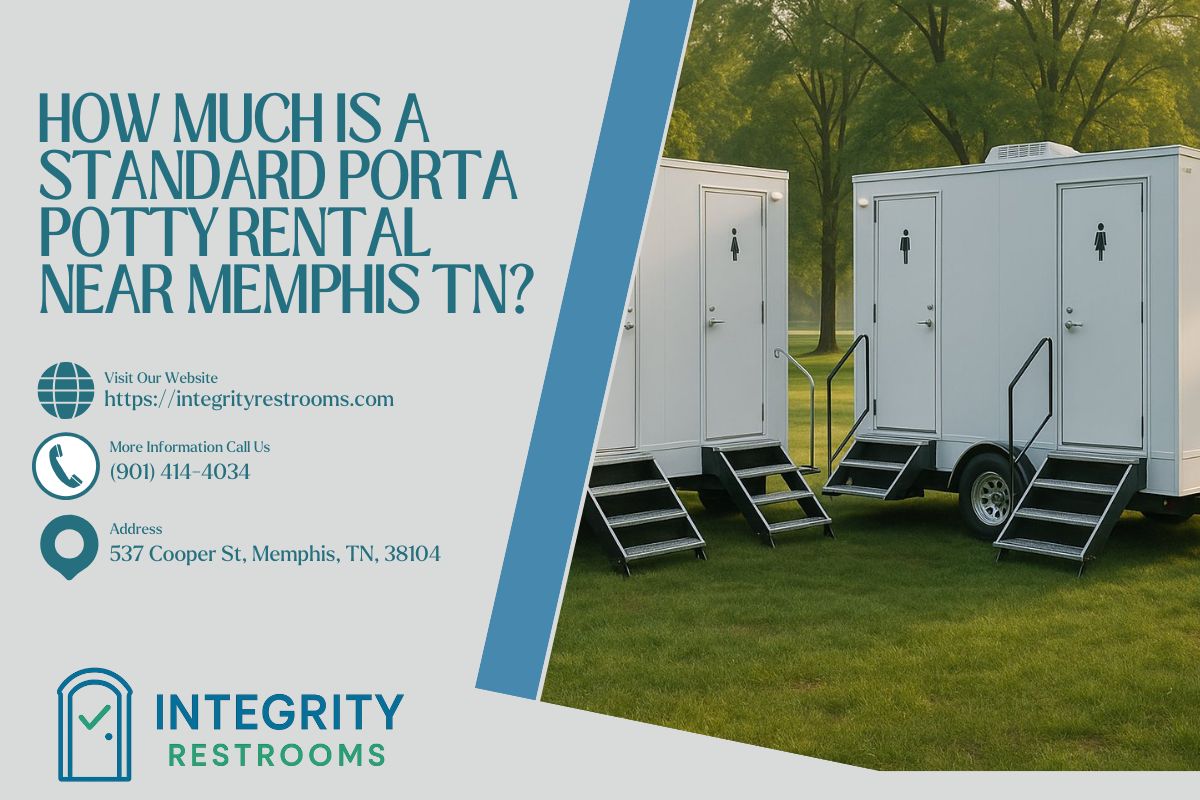
You’ll find Memphis porta potty rentals typically cost $75-$200 per unit monthly, depending on your specifications and service frequency. Standard units run cheaper, while ADA-compliant or deluxe models cost more. You’re free to choose what fits your needs.
No, you don’t need electricity or water hookups for standard porta potties. They’re self-contained units that operate independently, giving you placement freedom anywhere on your Memphis property without utility constraints or compliance requirements.





© 2026 Integrity Restrooms. All Rights Reserved.